Section 3 · What Digital Images Are Made Of
Resolution: Native vs. Effective
- Definition
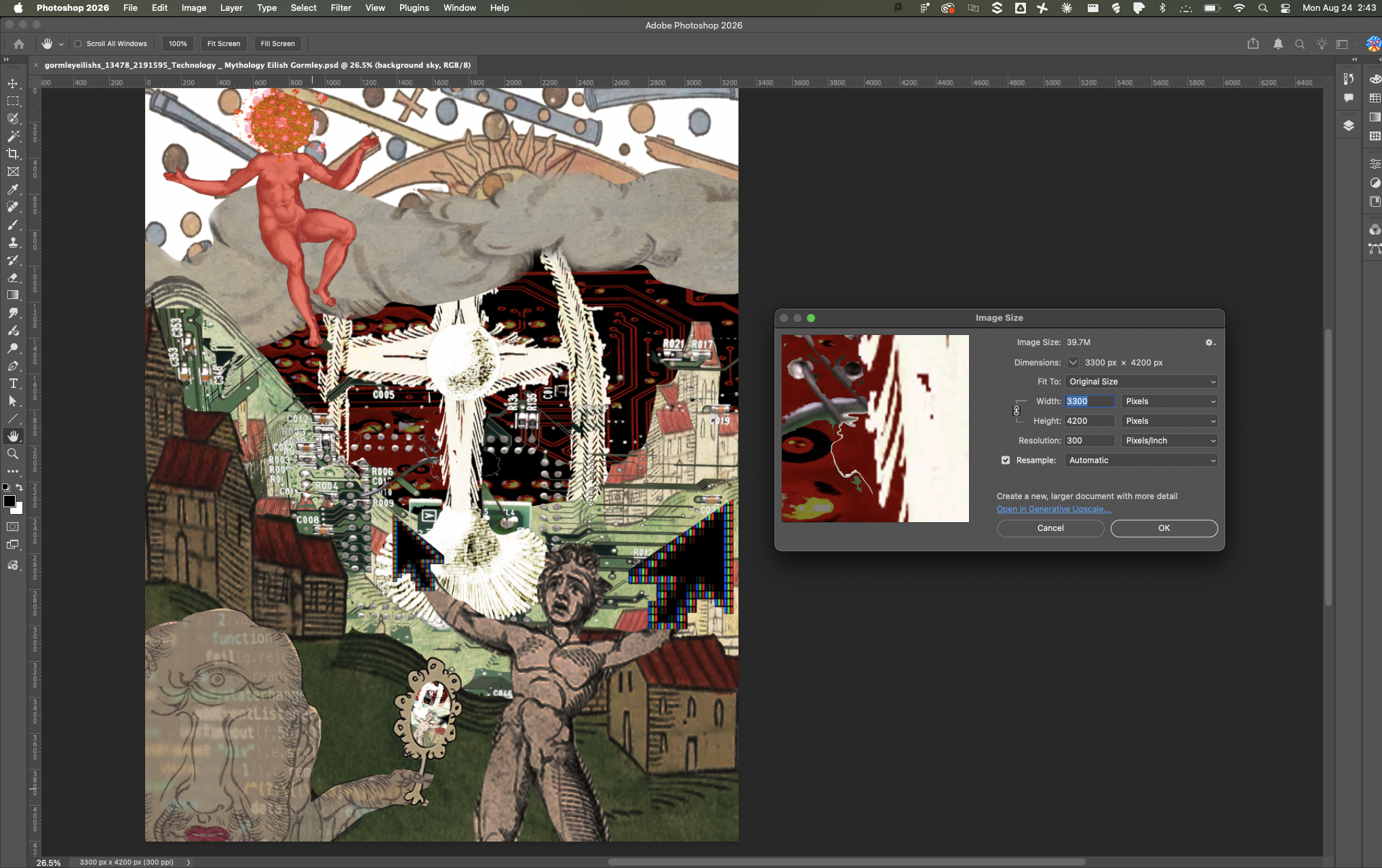
Native resolution is the pixel dimensions an image actually contains. Effective resolution is the pixel density it delivers at the size it has been placed — native pixels divided by final placed dimensions.
- Why it matters
An image can be 300 ppi in its own file and 90 ppi on the page, because it was scaled up after placement. Effective resolution is the only number that predicts what the print will look like.
- Example
The same 3000 × 3000 px file delivers 300 ppi when placed at 10 × 10 inches, but only 150 ppi when scaled up to fill a 20 × 20 inch area — same pixels, larger placement.
© Salvador Orara, CC BY-NC-SA 4.0. 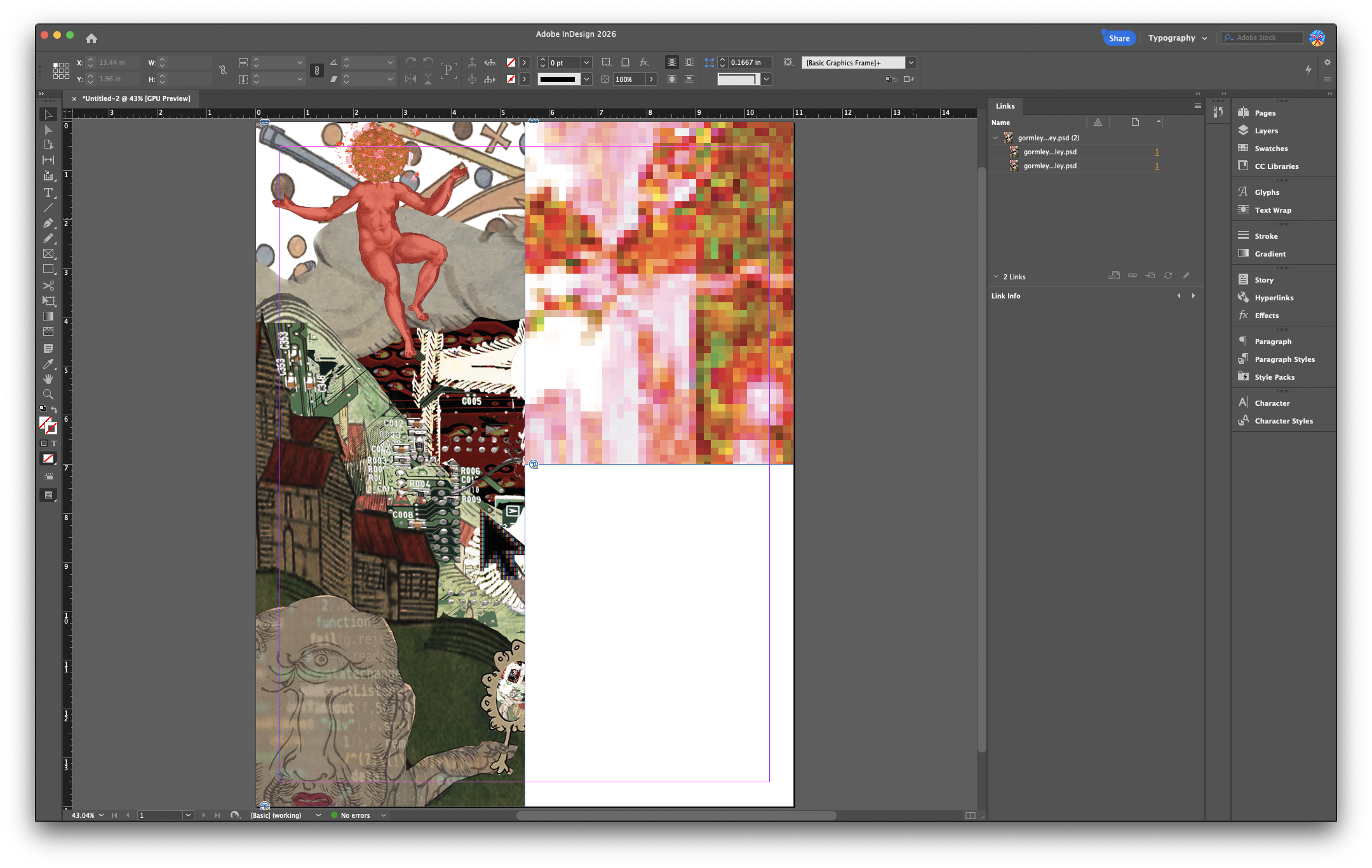
© Salvador Orara, CC BY-NC-SA 4.0. - Note
This is a common cause of a failed first print, and it can’t be diagnosed from inside the image editor — the editor only knows the file’s native pixels, not its placed size. The layout application’s links inventory reports the effective resolution directly; check it before you export.