Section 1 · Design Thinking
Define
- Definition
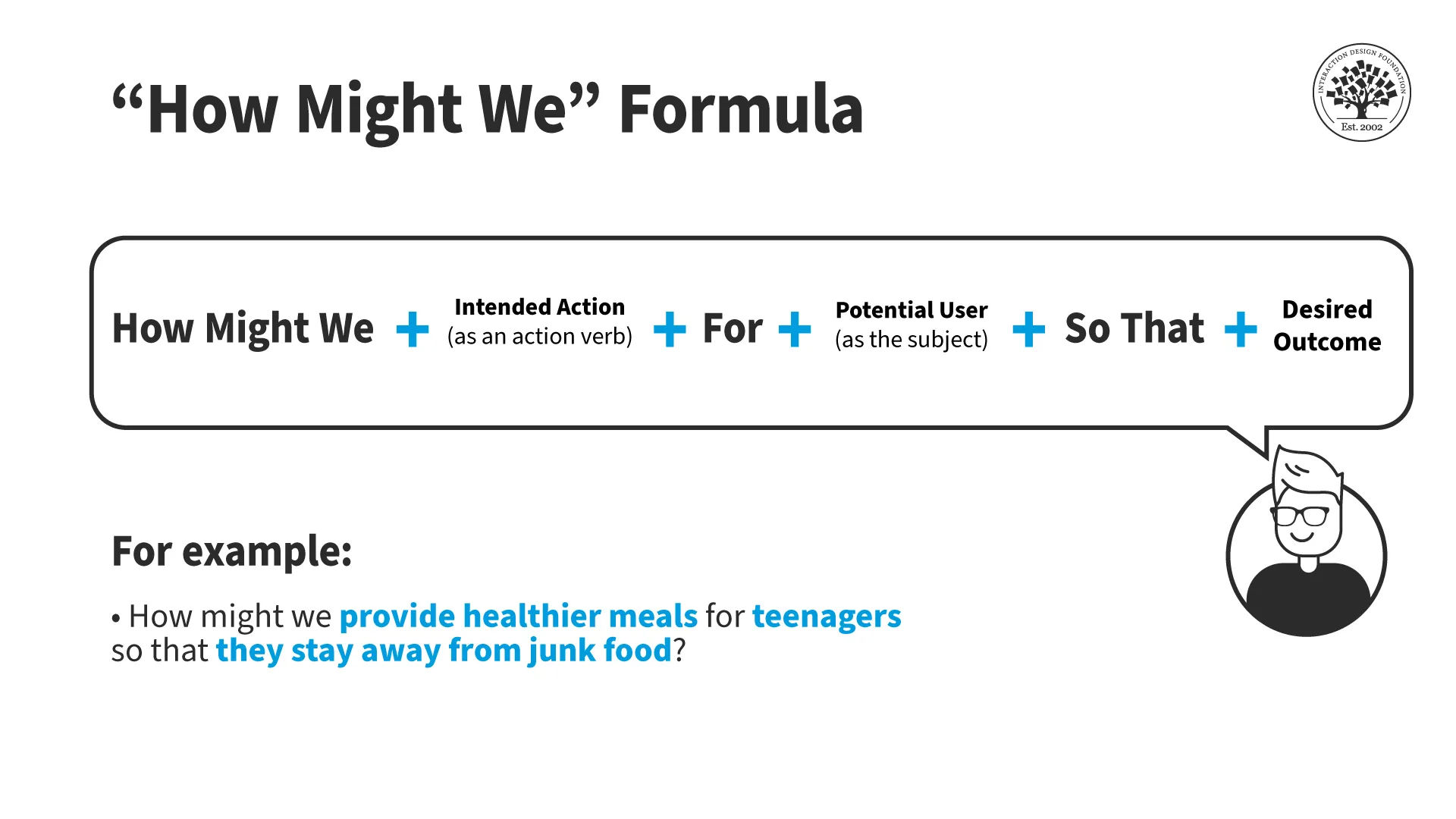
Synthesizing what you learned while empathizing into a single, clear problem statement — a point of view that frames the actual need to be met, often phrased as a “How might we…” question.
© Teo Yu Siang and the Interaction Design Foundation, CC BY-NC-SA 3.0 - Why it matters
A vague problem produces scattered solutions. Define converts raw observations into one specific, actionable challenge the rest of the process can aim at. Without it, ideation has no target.
- Example
Turning scattered interview notes into one statement: “How might we help first-year students orient themselves at a building’s entrance, when current signage assumes you already know the building’s layout?”
© Interaction Design Foundation, CC BY-SA 4.0 - Note
It’s easy to write a problem statement that smuggles in a solution — “we need a bigger map.” A good statement names the need and its cause, not the fix. Practice rewriting a solution-shaped statement into a need-shaped one until it’s second nature.